
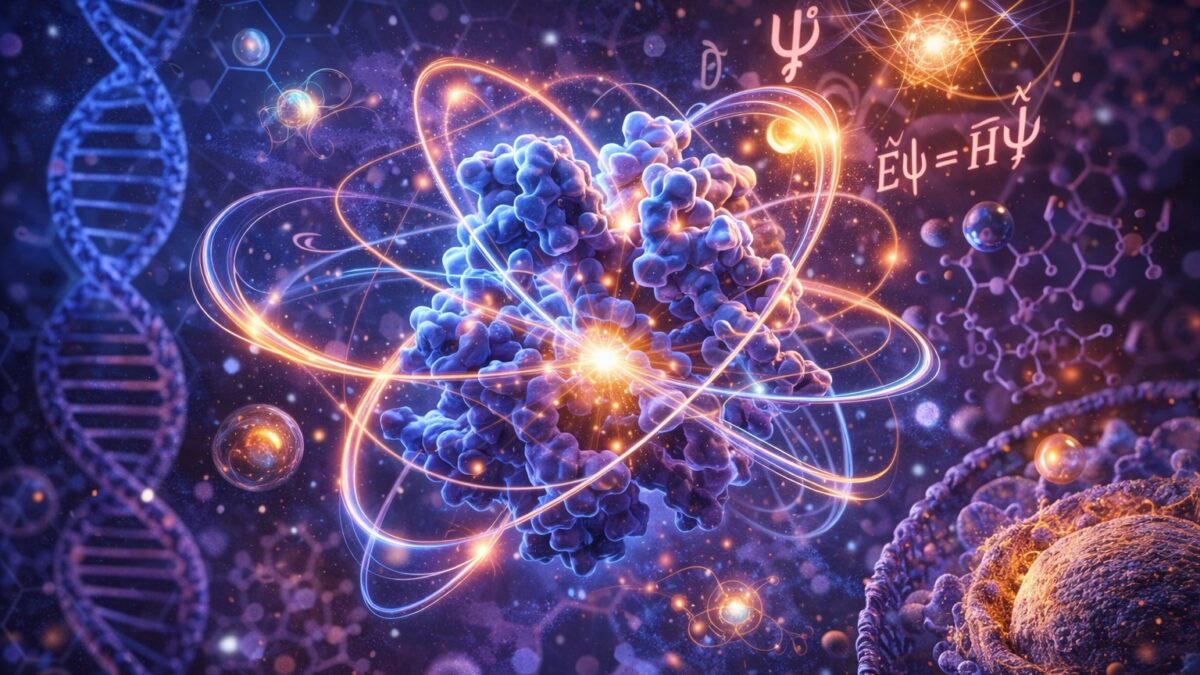
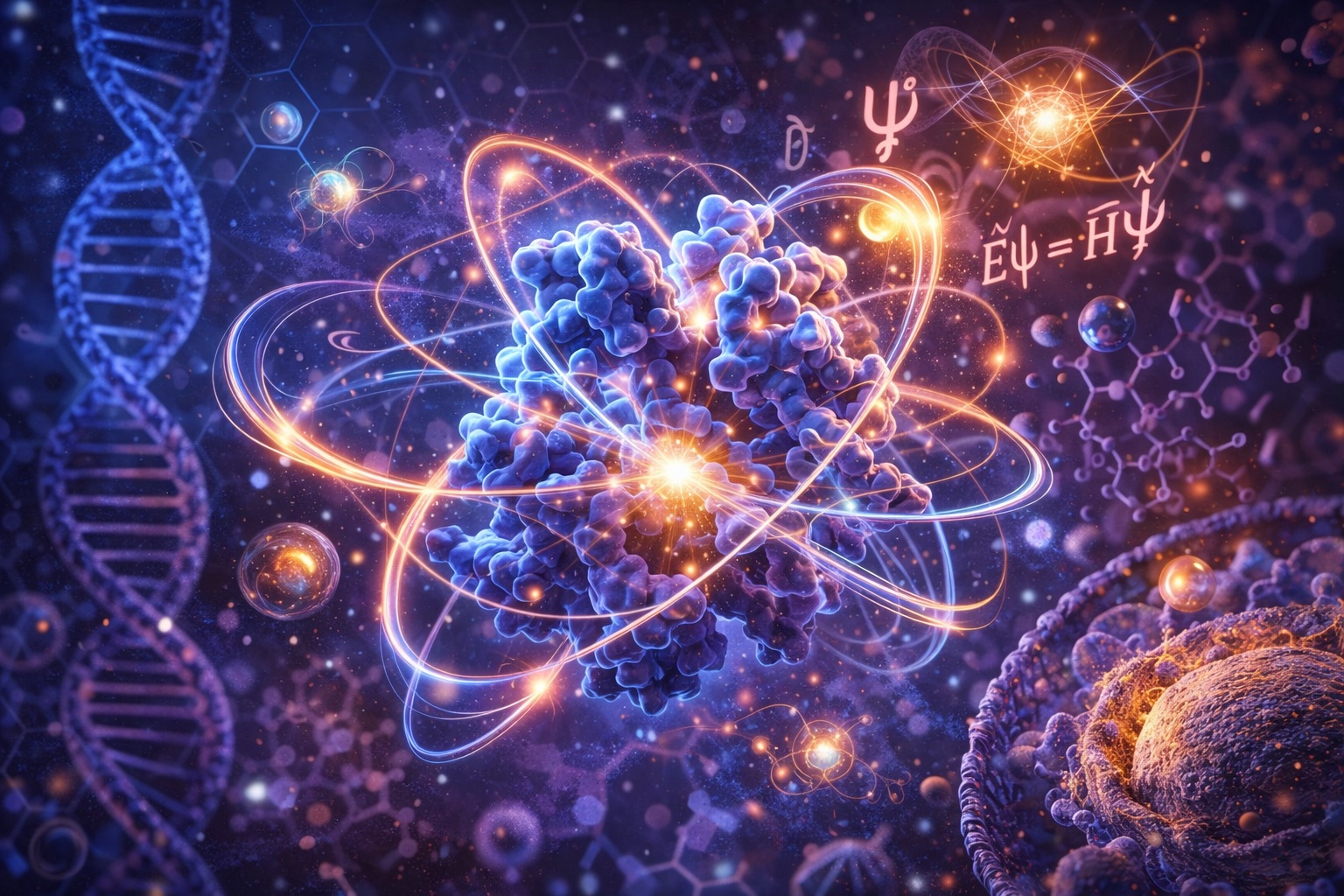
In the rapidly evolving landscape of biological sciences, a new frontier is emerging that promises to reshape our understanding of life’s fundamental processes. The concept of “quantum proteins” has gained traction within research circles and was spotlighted today in a comprehensive review by a leading scientific journal. This burgeoning field combines the principles of quantum mechanics with protein biology, offering unprecedented insights into molecular functions that classical biology alone cannot fully explain.
Related: In tight Tennessee congressional race, Republican Matt Van Epps pulls out victory
Related: Putin visits India amid Ukraine peace push: What’s on the agenda?
Related: Search for Light Sterile Neutrinos with Two Neutrino Beams at MicroBooNE
Understanding Quantum Proteins: A New Paradigm
Proteins are essential biomolecules responsible for nearly every function within living cells. Traditionally, protein science has relied on classical chemistry and biophysics to unravel their structures and mechanisms. However, the emerging idea of quantum proteins introduces the notion that quantum effects — such as superposition, tunneling, and entanglement — could play significant roles in protein folding, enzymatic activity, and signaling pathways.
Unlike conventional proteins, quantum proteins are theorized to operate with quantum coherence and other non-classical phenomena, potentially enabling biological systems to achieve efficiencies and functionalities previously thought impossible. This concept challenges the classical view and demands new experimental and computational approaches to explore protein behavior at quantum scales.
Scientific Foundations and Recent Developments
The integration of quantum mechanics into biology is not entirely new; quantum biology has explored phenomena such as photosynthesis and avian navigation. However, applying these principles directly to proteins represents a significant leap. Recent advances in ultrafast spectroscopy, quantum computing simulations, and cryo-electron microscopy have enabled scientists to observe subtle quantum effects within protein structures and dynamics.
These technological breakthroughs allow researchers to probe the electronic and vibrational states of proteins with unprecedented precision, revealing quantum signatures that influence biological activity. Studies conducted in the last 24 hours have highlighted experimental evidence supporting quantum tunneling in enzyme catalysis and coherence in protein complexes, suggesting that quantum mechanics may be integral to their function.
Key Areas of Quantum Protein Research
- Protein Folding: Quantum fluctuations might assist proteins in achieving their native folded states more efficiently than classical thermodynamics alone could explain.
- Enzymatic Catalysis: Quantum tunneling could enable enzymes to accelerate biochemical reactions beyond classical limits.
- Signal Transduction: Quantum coherence may facilitate rapid and precise cellular communication.
- Energy Transfer: Similar to photosynthetic systems, proteins could leverage quantum effects to optimize energy flow within cells.
Implications for Medicine and Biotechnology
The potential applications of quantum proteins span a broad spectrum of fields, with significant implications for healthcare, drug discovery, and synthetic biology. Understanding quantum effects in proteins could lead to the design of novel therapeutics targeting diseases with higher specificity and efficiency.
For example, drug molecules might be engineered to exploit quantum tunneling pathways to enhance binding affinity or modulate enzymatic activity with greater precision. Additionally, quantum-aware algorithms could revolutionize protein design, enabling the creation of synthetic proteins with tailored quantum properties for industrial or medical use.
Biotechnology companies are beginning to invest in this frontier, anticipating that quantum proteins will unlock new strategies for developing vaccines, biosensors, and molecular machines. As research progresses, the intersection of quantum mechanics and protein biology is expected to accelerate innovation in personalized medicine and advanced therapeutics.
Challenges and Future Directions
Despite its promise, the field of quantum proteins faces significant challenges. Experimental verification of quantum phenomena in proteins is complex due to the fragile and transient nature of quantum states in biological environments. Maintaining quantum coherence at physiological temperatures and timescales requires sophisticated instrumentation and methodologies.
Moreover, the theoretical frameworks necessary to fully describe quantum protein dynamics are still under development. Multidisciplinary collaboration between quantum physicists, biologists, chemists, and computational scientists is essential to build robust models and validate findings.
Looking forward, advancements in quantum computing and machine learning are expected to play critical roles in overcoming these obstacles. These technologies will enable the simulation of quantum protein systems at scales and resolutions previously unattainable, accelerating discovery and practical applications.
Research Priorities
- Developing sensitive experimental techniques to detect and measure quantum effects in proteins under physiological conditions.
- Creating theoretical models that integrate quantum mechanics with classical biological frameworks.
- Leveraging quantum computing to simulate complex protein dynamics and interactions.
- Exploring potential quantum effects in disease-related proteins to identify novel therapeutic targets.
- Fostering interdisciplinary research initiatives to bridge gaps between physics and biology.
Expert Insights
Industry experts and academic leaders emphasize that while the concept of quantum proteins is still in its nascent stage, its implications could be transformative. A senior researcher in quantum biology noted that this line of inquiry challenges long-standing assumptions and could redefine how biological processes are understood at the molecular level.
Experts agree that the integration of quantum mechanics into protein science will not only deepen fundamental knowledge but also drive innovation in biotechnology and medicine. They caution, however, that rigorous validation and cautious interpretation of data are vital to prevent premature conclusions.
Many in the scientific community advocate for increased funding and collaborative efforts, highlighting the necessity of combining expertise from diverse domains to advance this frontier responsibly and effectively.
Consumer Impact and Broader Societal Effects
As quantum protein research matures, consumers could experience direct benefits through improved diagnostics, targeted therapies, and enhanced biotechnological products. Personalized medicine could become more precise by incorporating quantum-informed models of protein behavior, potentially reducing side effects and increasing treatment efficacy.
On a societal level, breakthroughs in quantum protein science may contribute to addressing global health challenges, including infectious diseases and chronic conditions, by enabling faster development of vaccines and therapeutics.
Furthermore, the knowledge gained could influence environmental sustainability efforts through the design of efficient bio-catalysts and renewable energy technologies inspired by quantum biological processes.
Conclusion
The emergence of quantum proteins as a research focus represents a paradigm shift in biology, merging quantum physics with molecular life sciences to uncover new layers of complexity and functionality. Recent developments showcased today underscore the field’s potential to revolutionize our understanding of proteins, which could translate into significant advances in medicine, biotechnology, and beyond.
While challenges remain, ongoing interdisciplinary collaboration and technological innovation position quantum protein research at the forefront of 21st-century science. As investigations deepen, this novel approach promises not only to answer fundamental biological questions but also to catalyze breakthroughs that improve human health and technological capability.
- Democratic Rivals in Close Senate Primary Amid Texas Polling Confusion

- Why ‘Quantum Proteins’ Could Be the Next Big Thing in Biology – Nature
- Study Finds ChatGPT Health Under-Triaged Half of Medical Emergencies, Raising Concerns About AI in Healthcare

- In South Carolina Measles Outbreak, Vaccine Skepticism Led to Largest Outbreak Since 2000

- Ayatollah Ali Khamenei’s Son Emerges as Leading Choice to Be His Successor – The New York Times