
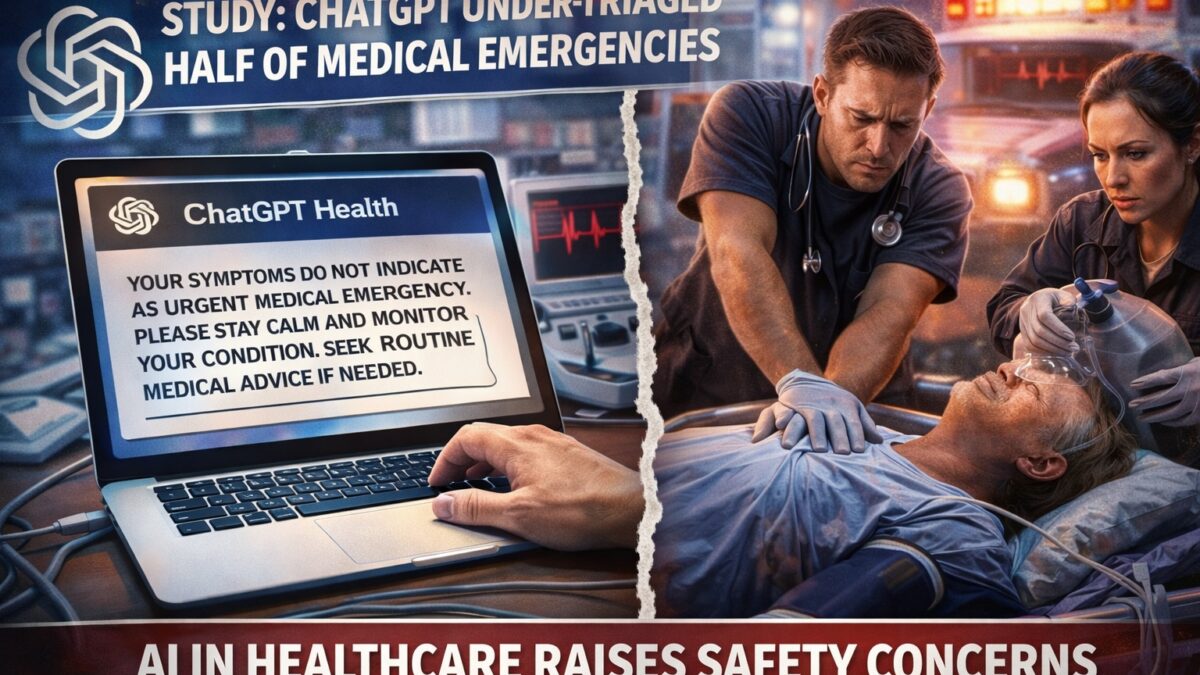
A recent study published today has brought to light significant concerns regarding the performance of ChatGPT Health, an AI-driven symptom checker, in accurately triaging medical emergencies. According to NBC News coverage of the study, ChatGPT Health under-triaged approximately half of urgent medical cases, potentially delaying critical care for patients in need. This finding underscores the challenges and risks associated with integrating artificial intelligence tools into frontline healthcare decision-making.
Related: Before the Roar: Previewing Lions vs Cowboys – Pride Of Detroit
Related: In tight Tennessee congressional race, Republican Matt Van Epps pulls out victory
Related: Search for Light Sterile Neutrinos with Two Neutrino Beams at MicroBooNE
Background: The Rise of AI in Medical Triage
Artificial intelligence has rapidly expanded into healthcare, promising to enhance diagnostics, patient engagement, and triage efficiency. Tools like ChatGPT Health leverage large language models to interpret symptoms and advise on the urgency of care required. These AI systems are increasingly used by consumers seeking immediate guidance before consulting healthcare professionals, particularly in emergency situations where timely decision-making is crucial.
However, the complexity of medical emergencies, variability in symptom presentation, and the critical need for accuracy pose significant challenges for AI-based triage systems. The study highlighted by NBC News serves as a timely examination of these challenges, analyzing ChatGPT Health’s performance against established clinical triage standards.
Key Findings of the Study
The study evaluated ChatGPT Health’s triage recommendations across a broad spectrum of simulated medical emergency cases. These scenarios included conditions requiring immediate hospital intervention, such as cardiac events, strokes, severe infections, and respiratory distress.
- Under-triage Rate: Approximately 50% of the emergency cases were under-triaged, meaning the AI recommended a lower level of urgency than clinically appropriate.
- Implications: Under-triage in emergencies can lead to delayed treatment, worsening patient outcomes, and increased risk of morbidity or mortality.
- Over-triage Instances: While less frequent, ChatGPT Health occasionally over-triaged non-urgent cases, potentially increasing unnecessary healthcare utilization.
- Consistency: The AI showed variability in triage accuracy across different types of conditions, struggling most with atypical symptom presentations.
These findings raise critical questions about the readiness of AI triage tools for independent use in urgent care contexts without professional oversight.
Understanding the Risks of AI Under-Triage
Under-triage is particularly dangerous in emergency medicine. It occurs when a patient’s symptoms suggest a severe condition, but the triage system advises a lower priority, potentially delaying emergency care. This can lead to:
- Progression of disease or injury due to treatment delays.
- Increased complications or permanent damage.
- Higher healthcare costs due to more extensive treatment needed later.
- Patient and caregiver anxiety caused by unclear or misleading guidance.
Given these risks, any triage tool must demonstrate extremely high sensitivity for detecting emergencies to be considered safe for public use.
Challenges in AI-Based Medical Triage
Several factors contribute to the difficulty AI systems face in accurately triaging emergencies:
- Complex Symptomatology: Medical emergencies often present with overlapping or non-specific symptoms that challenge algorithmic interpretation.
- Data Limitations: AI models are only as good as the data they are trained on. Insufficient representation of diverse populations or rare conditions can impair performance.
- Contextual Understanding: Unlike trained clinicians, AI lacks real-world contextual awareness, such as patient history, environmental factors, or subtle clinical signs.
- Communication Nuances: Patients often describe symptoms subjectively, and understanding nuances in language remains a challenge for AI.
These challenges highlight the importance of rigorous validation and continuous improvement of AI health tools before widespread deployment.
Consumer Impact and Healthcare System Implications
The increasing reliance on AI symptom checkers like ChatGPT Health has broad implications:
- Consumer Trust and Safety: Inaccurate triage can erode trust in AI tools and potentially harm patients who rely on them for urgent health decisions.
- Healthcare Access: While AI triage tools aim to improve access and reduce healthcare burden, under-triage could lead to missed emergency interventions.
- System Burden: Over-triage may contribute to overcrowding in emergency departments, while under-triage risks increased severity of cases presenting later.
Patients and caregivers should exercise caution when using AI symptom checkers and seek professional medical evaluation promptly when symptoms are severe or worsening.
Expert Insights on AI and Emergency Triage
Industry experts emphasize that while AI has transformative potential in healthcare, current models require thorough clinical validation and regulatory oversight.
- Expert Commentary: Medical professionals note that AI tools can support but not replace clinical judgment, especially in emergencies.
- Regulatory Perspective: Authorities advocate for transparent performance reporting and mandatory safety standards for AI-based health applications.
- Technological Development: Researchers are focused on improving AI interpretability, integrating multi-modal data, and enhancing training datasets to reduce errors.
Collaboration between AI developers, clinicians, and regulators will be key to advancing safe and effective AI triage solutions.
Looking Ahead: The Future of AI in Medical Emergencies
The study’s findings serve as a cautionary tale but also a call to action. Progress in this field will involve:
- Enhanced Algorithms: Developing more robust models that better understand clinical complexity.
- Hybrid Approaches: Combining AI tools with human oversight to ensure safety and accuracy.
- Patient Education: Informing users about the appropriate use and limitations of AI triage tools.
- Continuous Monitoring: Post-deployment surveillance to detect and address performance issues timely.
Ultimately, AI has the potential to augment emergency care but must be implemented responsibly to protect patient safety.
Conclusion
The recent study revealing that ChatGPT Health under-triaged half of medical emergencies highlights significant limitations in current AI triage technology. While AI symptom checkers offer promising avenues for improving healthcare accessibility and efficiency, their application in critical, time-sensitive situations demands caution. Patients should not rely solely on AI for emergency decisions, and developers must prioritize safety, accuracy, and transparency in future iterations. As AI continues to evolve, collaborative efforts among stakeholders will be essential to harness its benefits while minimizing risks in emergency medical care.
- Democratic Rivals in Close Senate Primary Amid Texas Polling Confusion

- Why ‘Quantum Proteins’ Could Be the Next Big Thing in Biology – Nature

- Study Finds ChatGPT Health Under-Triaged Half of Medical Emergencies, Raising Concerns About AI in Healthcare

- In South Carolina Measles Outbreak, Vaccine Skepticism Led to Largest Outbreak Since 2000

- Ayatollah Ali Khamenei’s Son Emerges as Leading Choice to Be His Successor – The New York Times