Introduction: A Contentious Christmas on Social Media
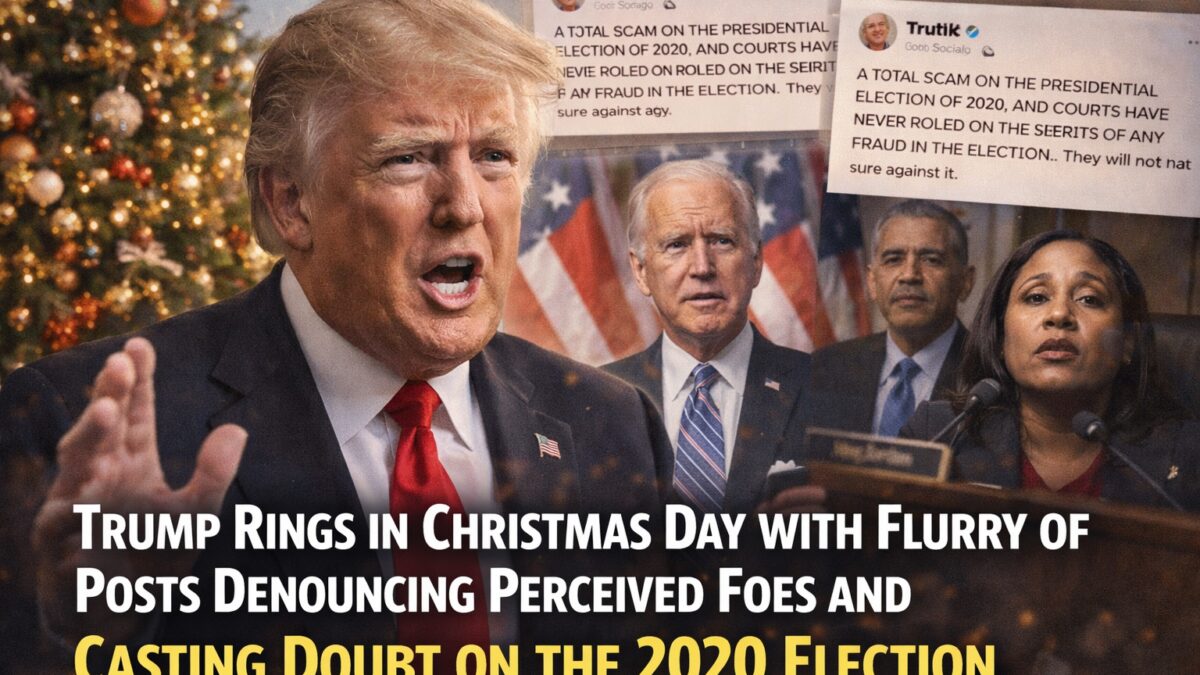
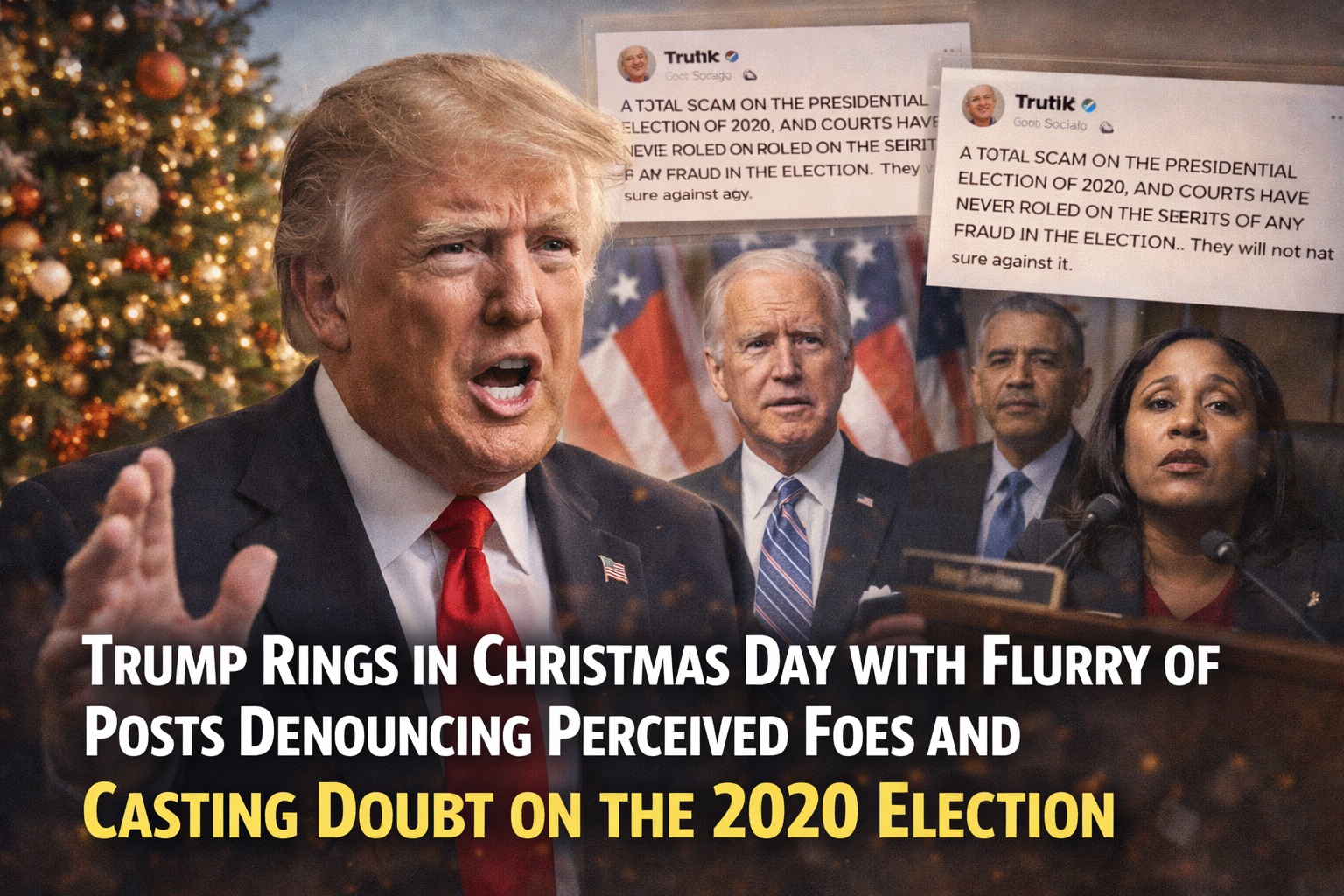
On Christmas Day, former President Donald Trump engaged in a vigorous online campaign, publishing multiple posts targeting his perceived political adversaries and reiterating claims that question the legitimacy of the 2020 presidential election. This social media activity marks a continuation of his longstanding narrative regarding election integrity and ongoing political disputes. The timing, coinciding with a major holiday, attracted significant public and media attention, raising questions about the broader implications of such rhetoric during a traditionally peaceful and reflective period.
Related: Democrats Release Never-Before-Seen Images and Videos of Jeffrey Epstein’s Island
Related: Republicans Begin to Tighten the Screws on Hegseth’s Pentagon
Related: In tight Tennessee congressional race, Republican Matt Van Epps pulls out victory
Background: The Context of Trump’s Online Activity
Since leaving office, Trump has maintained a prominent presence on digital platforms, frequently using them to communicate directly with supporters and critics alike. His posts often emphasize themes of electoral fraud, political opposition, and perceived injustices. This pattern of communication has influenced discourse within the Republican Party and among conservative voters, shaping narratives related to election legitimacy and partisan conflict.
The 2020 presidential election, which Trump lost, has remained a focal point of his public commentary. Despite multiple official audits, court rulings, and bipartisan confirmations of election validity, Trump continues to assert that the election was marred by widespread irregularities. These assertions have fueled divisions not only in political circles but also among the general populace.
Details of the Christmas Day Posts
Throughout Christmas Day, Trump’s posts were characterized by strong denunciations of political figures, media outlets, and institutions he perceives as adversaries. The messages ranged from direct accusations to implicit suggestions questioning the integrity of various actors involved in the electoral process.
- Denouncement of Political Opponents: Trump singled out high-profile Democrats and some Republicans, accusing them of undermining conservative values and orchestrating what he describes as a “rigged” political system.
- Reiteration of Election Doubts: His posts reiterated claims that the 2020 election was stolen, despite extensive evidence to the contrary. These statements include references to alleged irregularities and purported misconduct by election officials.
- Criticism of Media Coverage: Trump criticized major news organizations for what he labels as biased reporting and misinformation, which he argues misleads the public and distorts the political landscape.
The volume and tone of these posts on a day associated with goodwill and unity have prompted discussions regarding the impact of such messaging on national cohesion.
Implications for Political Discourse
The resurgence of election-related claims on a widely observed holiday highlights ongoing challenges within the American political environment. It underscores the persistence of deep partisan divides and the role social media plays in amplifying contentious narratives.
Such rhetoric can contribute to increased polarization, potentially influencing public trust in democratic institutions and electoral processes. Political analysts emphasize that continued dissemination of unverified claims, especially by influential figures, complicates efforts to foster bipartisan cooperation and national reconciliation.
Impact on Voter Confidence and Public Trust
Persistent doubts about election integrity may erode voter confidence, affecting participation and engagement in future elections. Experts note that maintaining trust in the democratic process is essential for the stability and legitimacy of governance.
While freedom of speech allows for the expression of diverse opinions, the spread of misinformation poses risks to informed decision-making among the electorate.
Social Media Platforms and Moderation Challenges
Trump’s posts on Christmas Day also bring attention to the ongoing debate about content moderation on social media platforms. Balancing the protection of free expression with the prevention of misinformation dissemination remains a complex issue for companies hosting political discourse.
Platforms grapple with policies that address influential users who post potentially misleading or divisive content. The situation underscores the need for transparent guidelines and consistent enforcement to maintain a healthy online environment.
Expert Insights
Political communication scholars and analysts observe that the timing and nature of Trump’s posts serve specific strategic purposes. Holiday periods often attract heightened public attention, and leveraging such moments can maximize message reach and impact.
Experts highlight several key points:
- Reinforcement of Base Support: Reiterating controversial claims energizes core supporters and maintains engagement.
- Influence on Party Dynamics: Such communications can shape internal party debates and candidate positioning ahead of upcoming elections.
- Media Cycle Control: Posting during holidays can dominate news cycles, overshadowing other events.
Additionally, analysts caution about the long-term consequences of sustained election doubt rhetoric, emphasizing the importance of fostering fact-based public discourse to support democratic resilience.
Consumer and Public Impact
For everyday citizens, the proliferation of election-related claims can create confusion and mistrust. This environment challenges individuals’ ability to discern factual information and contributes to societal fragmentation.
Community leaders and educators stress the role of media literacy in empowering consumers to critically evaluate information sources. Encouraging diverse and credible news consumption is viewed as a crucial countermeasure to misinformation.
Looking Ahead: The Political Landscape in the Current Year
As the political calendar advances, the influence of figures like Trump on public opinion and party strategy remains significant. The persistence of election dispute narratives may shape campaign themes, voter mobilization efforts, and legislative priorities.
Observers anticipate continued debates surrounding election security, voting rights, and democratic norms. The interplay between political messaging and institutional responses will be critical in determining the trajectory of American politics moving forward.
Conclusion
Former President Donald Trump’s Christmas Day social media activity, characterized by denunciations of perceived foes and renewed doubts about the 2020 election, reflects ongoing tensions within the American political sphere. While such messaging resonates with a segment of the electorate, it also raises concerns about polarization, misinformation, and trust in democratic processes. As the year progresses, the implications of this rhetoric will continue to unfold, underscoring the need for careful analysis, responsible communication, and efforts to uphold the integrity of political discourse.
- Coast Guard Tracks Down Runaway Oil Tanker Linked to Iran and Venezuela

- Trump Rings in Christmas Day with Flurry of Posts Denouncing Perceived Foes and Casting Doubt on the 2020 Election
- Saudi Arabia Urges Yemen’s Separatists to Withdraw from Two Governorates Amid Coalition Strains

- House and Senate Committees Launch Investigations into Reported Second Strike on Alleged Drug Boat
- One Year On From Martial Law Crisis, South Korea Celebrates Its Democracy’s Resilience