
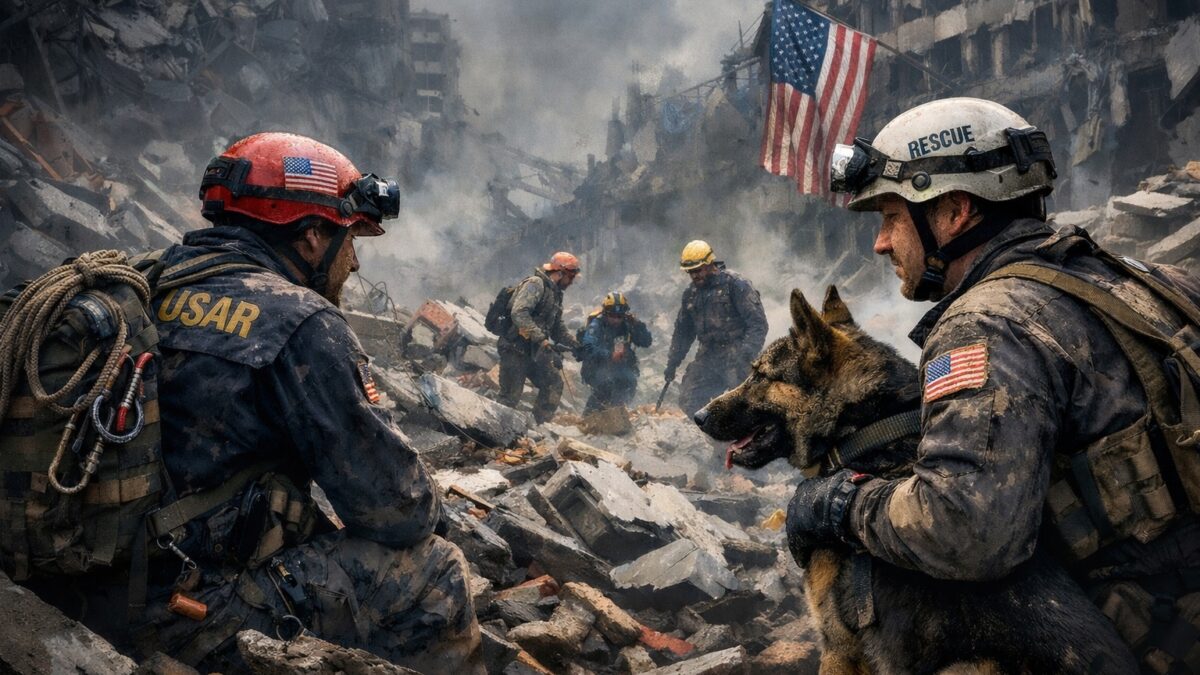
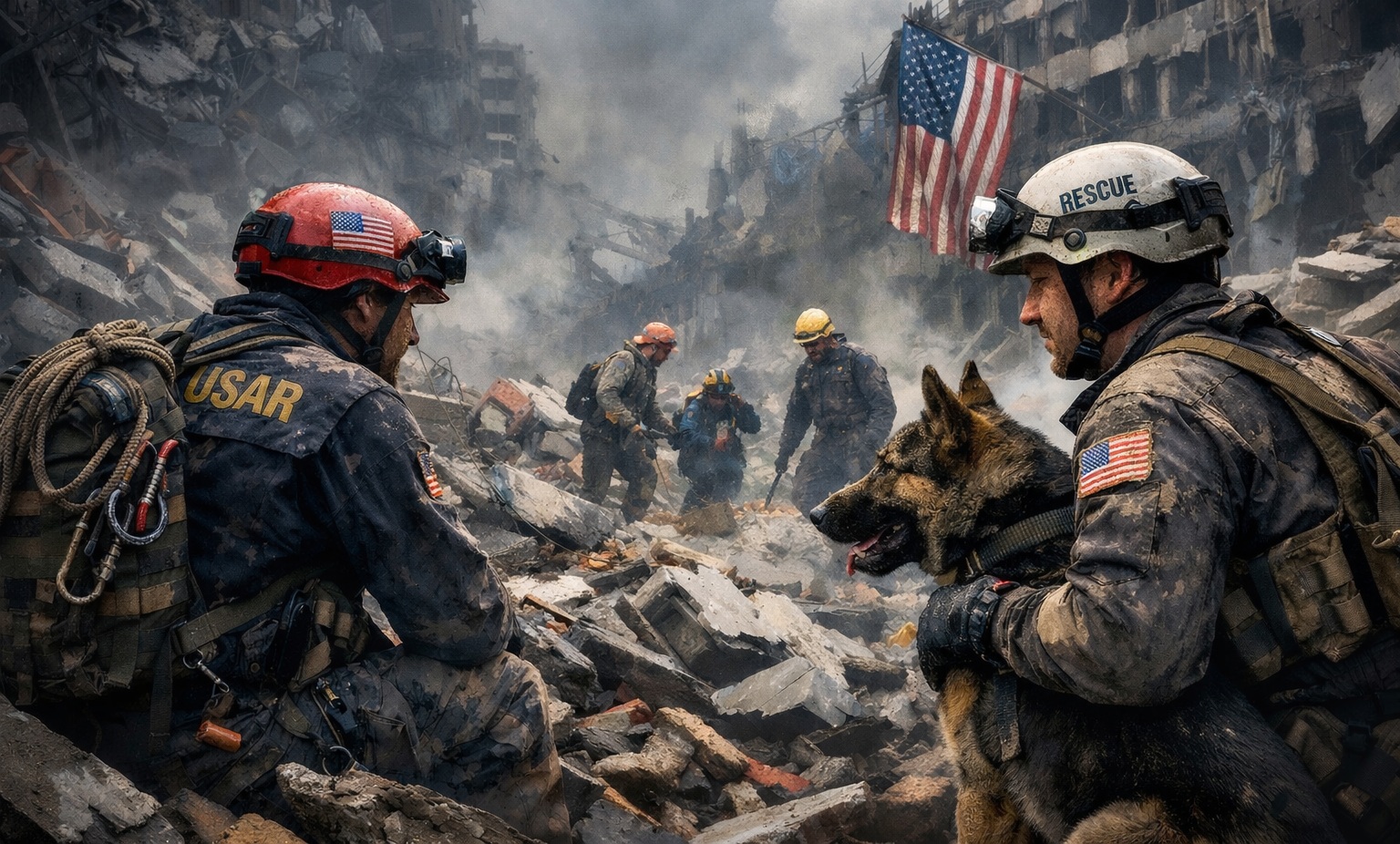
There’s No 911 for Us: Inside America’s Elite Urban Search and Rescue Teams
In the aftermath of disasters—whether natural or man-made—there exists a specialized cadre of responders who operate beyond the usual emergency call systems. America’s elite urban search and rescue (USAR) teams are tasked with locating and extracting victims trapped in collapsed structures, debris, or inaccessible urban environments. Unlike conventional emergency services that respond to 911 calls, these teams often face situations where immediate help is unavailable, underscoring the critical phrase: “There’s no 911 for us.” This article delves into the complexities, capabilities, and challenges of these teams, shedding light on their indispensable role in disaster response and urban resilience.
Related: New York Declares Flu Prevalent; Mask Mandate Enacted for Certain Workers
Related: New Details Emerge in Deadly Shooting of Two National Guard Members
Related: Search for Light Sterile Neutrinos with Two Neutrino Beams at MicroBooNE
The Unique Mission of Urban Search and Rescue Teams
Urban search and rescue teams specialize in operations that go beyond typical emergency response. Their core mission involves finding and rescuing victims trapped under rubble from earthquakes, explosions, building collapses, and other catastrophic events. Unlike fire departments or ambulance services that respond to phone calls, USAR teams often deploy proactively or upon request from authorities after large-scale incidents.
These teams operate in environments that are unstable, hazardous, and unpredictable. Their work demands a blend of technical skills, physical endurance, and psychological resilience. The absence of an immediate call system means they must respond based on situational awareness, monitoring, and coordination with other agencies.
Scope and Scale of Operations
- Disaster Response: USAR teams are mobilized for natural disasters like earthquakes, hurricanes, and floods, as well as human-made incidents such as terrorist attacks and industrial accidents.
- Search Techniques: They employ specialized tools including seismic sensors, search cameras, and canine units trained to detect human scent beneath debris.
- Rescue Execution: Precision cutting, shoring up unstable structures, and medical triage are critical components of their interventions.
Their work often involves multi-agency coordination, requiring seamless communication with local fire, police, medical teams, and federal entities like FEMA and the Department of Homeland Security.
Training and Expertise: Building a Highly Skilled Force
USAR team members undergo rigorous training to meet the demanding requirements of their roles. Their expertise spans multiple disciplines:
- Structural Engineering Knowledge: Understanding building materials and collapse patterns to safely navigate hazardous zones.
- Medical Skills: Emergency medical training to provide immediate care to trapped or injured victims.
- Technical Rescue Techniques: Rope rescue, confined space entry, and heavy machinery operation.
- Canine Search Units: Specialized dogs trained to locate survivors through scent detection.
Continuous drills, simulations, and inter-agency exercises maintain their readiness. Given the unpredictable nature of disasters, adaptability and rapid decision-making are critical qualities cultivated throughout their training.
Psychological Preparedness and Team Cohesion
Beyond physical and technical training, psychological resilience is a fundamental aspect of USAR teams. Operators frequently engage with traumatic environments and distressed victims. Structured psychological support and peer counseling are integral to sustaining mental health and operational effectiveness.
Technology and Innovation in Urban Search and Rescue
Modern USAR operations integrate cutting-edge technology to improve efficiency and safety. Recent advancements include:
- Drones: Providing aerial surveillance to assess damage and identify accessible entry points without exposing responders to immediate danger.
- Robotics: Remote-controlled robots equipped with cameras and sensors can enter confined spaces to locate survivors.
- Geospatial Mapping: Real-time 3D mapping of disaster sites aids in planning and executing rescue operations.
- Communication Systems: Robust, interoperable communication platforms enable coordination across multiple agencies and jurisdictions, especially when conventional networks fail.
These technologies are evolving rapidly and becoming indispensable for USAR teams, enabling them to operate more safely and effectively in complex urban environments.
Challenges Faced by Urban Search and Rescue Teams
Despite their expertise and resources, USAR teams encounter numerous obstacles that complicate their missions:
- Resource Limitations: Deploying and sustaining operations require significant funding, specialized equipment, and personnel availability.
- Coordination Difficulties: Large-scale disasters often involve multiple jurisdictions and agencies, creating logistical and communication challenges.
- Unpredictable Environments: Structural instability, hazardous materials, and ongoing disaster conditions pose constant risks.
- Delayed Activation: Unlike 911 responders, USAR teams may not be instantly activated, potentially impacting survivor outcomes.
These challenges necessitate ongoing investment in training, equipment, inter-agency collaboration, and disaster preparedness planning.
Expert Insights: Perspectives from Industry Leaders
Experts in emergency management emphasize the vital role USAR teams play in national disaster resilience. They highlight the following key points:
- Proactive Preparedness: Investing in urban search and rescue capabilities before disasters strike is essential to reduce response times and improve survivor recovery rates.
- Integrated Response Systems: Enhancing interoperability between USAR teams and conventional emergency responders can streamline operations and resource allocation.
- Community Engagement: Educating the public about USAR functions and encouraging resilience measures can mitigate disaster impacts.
- Technological Adaptation: Continuing to adopt and develop new technologies is crucial to keep pace with evolving urban landscapes and disaster threats.
These insights underscore the complexity and critical necessity of maintaining elite USAR teams as part of the broader emergency response infrastructure.
Implications for Policy and Public Safety
The existence and effectiveness of USAR teams have broad implications for public safety and policy-making. As urban populations grow and climate change increases the frequency and severity of natural disasters, the demand for specialized rescue capabilities intensifies.
Policymakers are called upon to:
- Allocate sustained funding to USAR programs at local, state, and federal levels.
- Develop comprehensive disaster response frameworks that incorporate USAR teams seamlessly.
- Promote research and development in rescue technologies.
- Encourage cross-sector partnerships between government, private sector, and nonprofit organizations for disaster preparedness and response.
Effective policies can ensure that these teams remain equipped, trained, and ready to respond swiftly when disaster strikes.
Consumer Impact and Public Awareness
For the general public, awareness of USAR teams’ role can influence expectations and preparedness behaviors. Understanding that these teams do not operate on a 911 call basis highlights the importance of immediate local emergency response and personal preparedness.
Consumers and communities benefit when they:
- Recognize the limitations and scope of various emergency responders.
- Participate in community-based disaster preparedness programs.
- Support local and national initiatives aimed at enhancing disaster resilience.
Increased public knowledge can foster stronger community resilience and cooperation during emergencies.
Looking Ahead: The Future of Urban Search and Rescue
As urban environments continue to evolve, so too must the strategies and capabilities of USAR teams. Future developments may include:
- Greater integration of artificial intelligence and machine learning to analyze disaster sites and predict structural failures.
- Expanded use of autonomous drones and robots to reduce risk to human rescuers.
- Enhanced virtual reality training to simulate complex rescue scenarios with higher fidelity.
- More robust international collaboration for disaster response, sharing expertise and resources globally.
These trends promise to enhance the speed, safety, and effectiveness of urban search and rescue operations in the years to come.
Conclusion
America’s elite urban search and rescue teams occupy a unique and indispensable niche in the nation’s emergency response ecosystem. Operating without the immediacy of a 911 call, these teams must be prepared to respond swiftly and effectively in chaotic, dangerous environments. Their specialized training, technological innovation, and inter-agency coordination save lives when conventional emergency systems are overwhelmed or insufficient.
As urban populations expand and disaster risks intensify, continued investment, policy support, and public awareness are crucial to maintaining and enhancing these teams’ capabilities. Recognizing their challenges and contributions fosters a more resilient society equipped to face the uncertainties of modern urban disasters.
- Democratic Rivals in Close Senate Primary Amid Texas Polling Confusion

- Why ‘Quantum Proteins’ Could Be the Next Big Thing in Biology – Nature

- Study Finds ChatGPT Health Under-Triaged Half of Medical Emergencies, Raising Concerns About AI in Healthcare

- In South Carolina Measles Outbreak, Vaccine Skepticism Led to Largest Outbreak Since 2000

- Ayatollah Ali Khamenei’s Son Emerges as Leading Choice to Be His Successor – The New York Times