
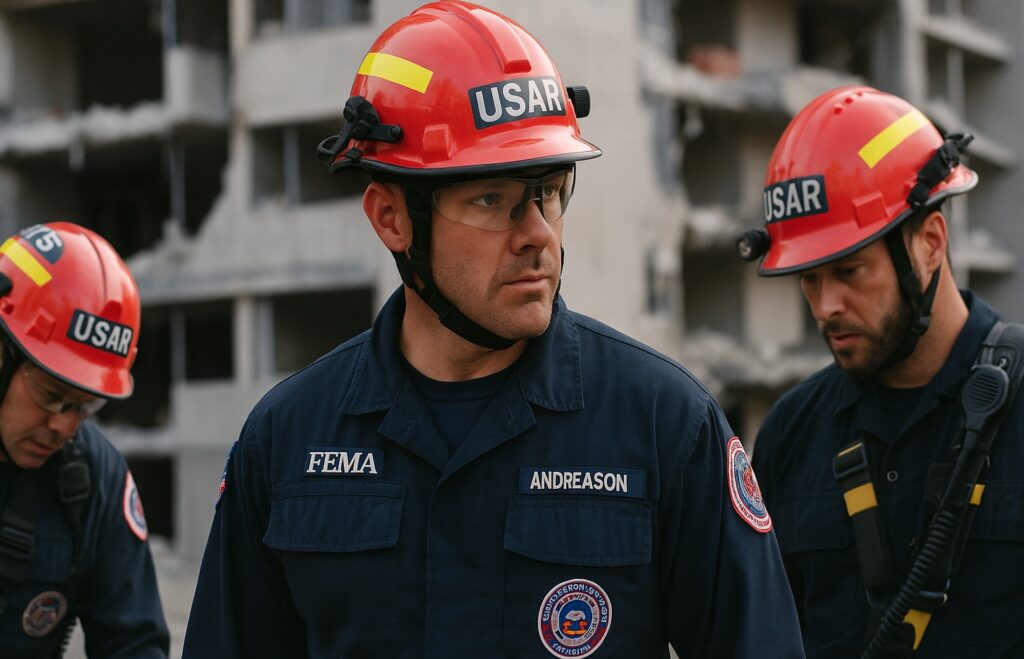
In the vast landscape of emergency response in the United States, there exists a specialized cadre of professionals who operate under conditions where traditional emergency services cannot reach. These elite urban search and rescue (USAR) teams are trained to tackle disasters that overwhelm local resources, often navigating collapsed structures, hazardous environments, and chaotic scenes where “there’s no 911 for us.” Their work is critical yet largely invisible to the public until catastrophe strikes.
Related: The 100 Best Albums of 2025 – Rolling Stone
Related: This Can’t Be the Future Meghan Markle Envisioned
Related: Search for Light Sterile Neutrinos with Two Neutrino Beams at MicroBooNE
Understanding Urban Search and Rescue Teams
Unlike conventional first responders who address immediate medical or fire emergencies, USAR teams are multi-disciplinary units equipped to conduct specialized rescue operations. They respond to events such as earthquakes, building collapses, industrial accidents, and large-scale disasters, where victims are trapped or inaccessible.
USAR teams typically consist of firefighters, engineers, medical personnel, canine units, and technical specialists. Their training includes structural assessment, breaching, shoring, medical stabilization, and the use of advanced technologies like radar and sonar to detect victims beneath rubble.
The Scope of USAR Missions
- Disaster Response: USAR teams are mobilized during natural disasters such as earthquakes, hurricanes, and tornadoes when infrastructure failure results in trapped individuals.
- Technical Rescue: Operations include confined space rescue, trench collapse, and high-angle rescues requiring specialized equipment and skills.
- Support to Local Agencies: When local emergency services are overwhelmed or lack necessary expertise, USAR units provide critical assistance.
Challenges Faced by Urban Search and Rescue Teams
The complexity of USAR missions presents several challenges, both operational and logistical, that demand rigorous preparation and resilience.
Environmental and Structural Hazards
USAR personnel often enter unstable or partially collapsed buildings, risking secondary collapses. They encounter hazardous materials, electrical dangers, and limited access. Navigating these threats requires precise risk assessment and protective measures to safeguard rescuers and victims alike.
Coordination Without a Central 911 Equivalent
Unlike typical emergency calls routed through 911, USAR activations often come through state or federal emergency management agencies, or interagency agreements. This absence of a universal, immediate dispatch system means teams must remain on high alert and maintain readiness for rapid deployment at unpredictable hours.
Resource and Funding Constraints
Many USAR teams operate as part of local fire departments or regional task forces but face challenges securing sustained funding for training, equipment, and staffing. The unpredictable nature of large-scale disasters complicates budget planning, often resulting in reliance on volunteers or part-time specialists.
Technological Innovations Enhancing USAR Capabilities
Advancements in technology have significantly augmented the effectiveness of urban search and rescue operations.
- Robotics and Drones: Remote-controlled robots and aerial drones provide reconnaissance and victim detection in hazardous or inaccessible areas, reducing risk to human rescuers.
- Sensing Equipment: Acoustic sensors, thermal imaging, and ground-penetrating radar enable teams to locate survivors beneath debris with greater precision.
- Communication Systems: Enhanced communication tools facilitate coordination among multiple agencies and across challenging environments where traditional signals may fail.
Training and Preparedness
Continuous training is fundamental to USAR team readiness. Drills simulate a variety of scenarios, emphasizing teamwork, technical skill, and rapid decision-making under stress. These exercises often involve collaboration with local agencies and federal partners to ensure interoperability during actual deployments.
Certifications and standards set by national organizations guide the qualifications of USAR personnel, ensuring consistency and professionalism across teams nationwide.
Expert Insights: The Importance of Specialized Urban Rescue Units
Industry experts highlight the indispensable role of elite urban search and rescue teams in disaster resilience and public safety. Their unique skill sets and capabilities fill critical gaps that traditional emergency services cannot address alone.
Experts emphasize several key points:
- Integrated Response: Effective disaster management requires seamless integration between USAR teams, local responders, and federal agencies to optimize resource allocation and operational efficiency.
- Community Education: Public awareness about the role and limitations of USAR teams can improve community preparedness and expectations during emergencies.
- Investment in Training and Technology: Sustained funding is essential to maintain cutting-edge equipment and retain skilled personnel capable of adapting to evolving disaster scenarios.
- Mental Health Support: Given the high-stress environments USAR teams operate in, psychological support and resilience programs are crucial for long-term team effectiveness.
Implications and Consumer Impact
The presence of elite USAR teams bolsters national disaster response capabilities, directly impacting public safety and recovery outcomes. Their operations save lives, reduce long-term economic losses, and provide critical support to overwhelmed emergency systems.
For communities, understanding the existence and function of these teams can influence expectations during disasters and encourage participation in local preparedness initiatives. On a broader scale, the effectiveness of USAR units underscores the importance of federal and state investment in emergency management infrastructure.
Looking Ahead: The Future of Urban Search and Rescue
As urban environments grow denser and climate-related disasters increase in frequency and intensity, the demand for highly capable USAR teams will continue to rise. Future developments are likely to focus on:
- Enhanced Automation: Increased use of AI-driven tools and autonomous equipment to conduct preliminary search operations safely.
- Improved Interagency Collaboration: Streamlined communication platforms and joint training exercises to unify response efforts.
- Expanded Community Engagement: Programs to involve local residents in disaster preparedness and resilience planning.
- Global Knowledge Sharing: Cross-border cooperation to adopt best practices and innovations from international USAR experiences.
These advancements will strengthen the capability of USAR teams to respond swiftly and effectively, ultimately saving more lives and reducing the catastrophic impacts of urban disasters.
Conclusion
America’s elite urban search and rescue teams operate on the front lines of disaster zones where conventional emergency responses fall short. Their specialized skills, rigorous training, and innovative technologies enable them to navigate complex and dangerous environments to locate and rescue victims. Despite challenges such as funding constraints and the absence of a centralized “911” system for their activation, these teams remain an essential component of the nation’s emergency response framework.
Continued investment in resources, technology, and mental health support, combined with enhanced public awareness, will ensure these unseen heroes remain prepared for the increasing demands of urban disaster response. Their critical work not only saves lives but also strengthens community resilience in the face of an uncertain future.