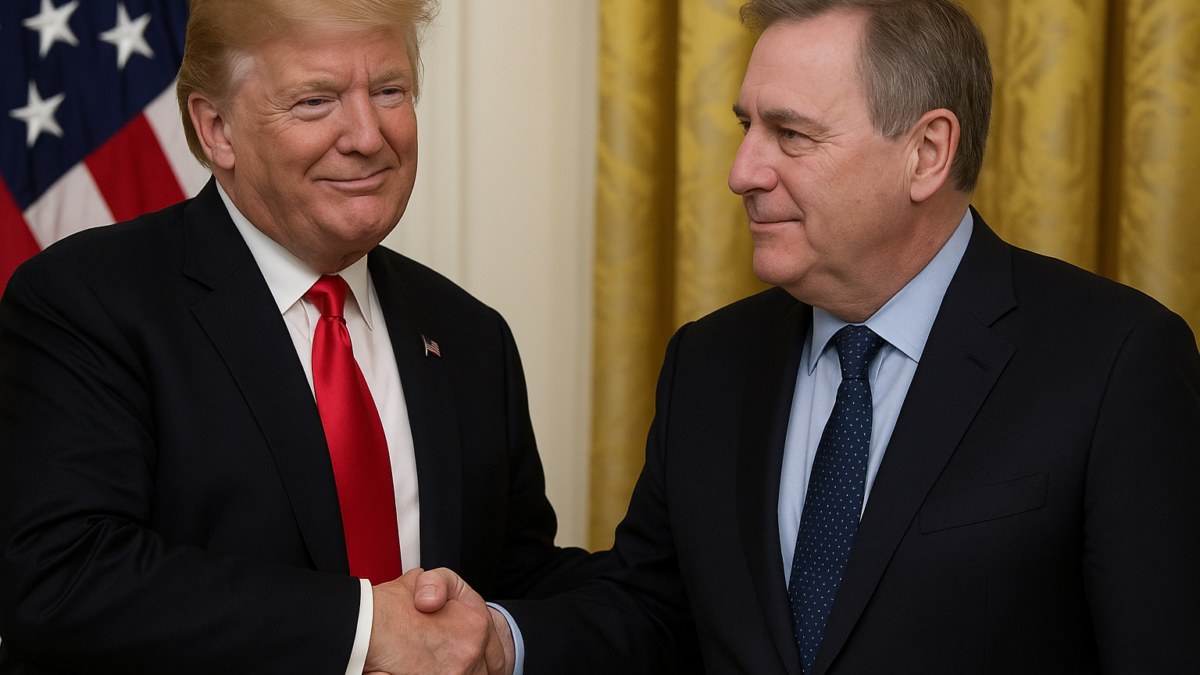

In a significant development announced today, former President Donald Trump has granted a full pardon to Tim Leiweke, a prominent executive known for his instrumental role in the development of Seattle’s Climate Pledge Arena. This pardon marks a notable moment in the intersection of business, law, and politics, raising discussions about the broader implications for the sports and entertainment industry as well as corporate governance.
Related: Trump Highlights ‘Very Good’ Meeting Between Witkoff, Kushner, and Putin
Related: New Details Emerge in Deadly Shooting of Two National Guard Members
Related: In tight Tennessee congressional race, Republican Matt Van Epps pulls out victory
Background: Tim Leiweke and the Climate Pledge Arena
Tim Leiweke is a well-known figure in the sports and entertainment sectors, with a career spanning leadership roles in several major organizations. Most recently, he has been a driving force behind the Climate Pledge Arena, located in Seattle, Washington. The arena is notable not only for its state-of-the-art facilities but also for its pioneering commitment to sustainability, being one of the first large-scale arenas designed to operate with net-zero carbon emissions.
The Climate Pledge Arena serves as the home for the NHL’s Seattle Kraken and the WNBA’s Seattle Storm, among other events. Its development has been celebrated as a model for integrating environmental responsibility with commercial and entertainment objectives. Leiweke’s vision and leadership were central to securing investments, partnerships, and navigating regulatory frameworks critical to the arena’s completion.
Details of the Pardon
The full pardon granted by former President Trump was announced within the last 24 hours. While official documents and statements have not detailed the specific charges or legal proceedings involved, the pardon effectively absolves Leiweke of any federal offenses linked to his past business dealings. This clemency removes any ongoing legal liabilities and restores certain rights that may have been affected.
Presidential pardons are a constitutional power that can be exercised for various reasons, including correcting perceived judicial errors or offering clemency for political or humanitarian considerations. The decision to issue a pardon to Leiweke has sparked conversation about the criteria and motivations behind such actions, particularly given Leiweke’s high-profile status and contributions to a landmark urban development project.
Implications for Climate Pledge Arena and Stakeholders
The pardon carries multiple implications for the Climate Pledge Arena and its stakeholders:
- Business Continuity: The removal of legal uncertainties surrounding Leiweke ensures more stable leadership and planning for ongoing operations and future expansions related to the arena.
- Investor Confidence: Legal clarity may bolster confidence among investors, sponsors, and partners, potentially facilitating new funding opportunities and collaborations.
- Reputation Management: While Leiweke’s pardon may alleviate some reputational risks, it also invites scrutiny regarding governance practices and the transparency of business operations linked to the arena.
These factors combined influence not just the arena’s trajectory but also the broader perception of sustainable infrastructure projects and public-private partnerships in urban development.
Legal and Political Context
Presidential pardons have long been subjects of debate, particularly when involving figures connected to influential industries or political allies. Leiweke’s pardon should be viewed within this complex context, where legal, political, and economic interests converge.
Experts emphasize that while pardons can serve as instruments of justice and mercy, they also raise questions about accountability and fairness. The opaque nature of some pardon decisions can affect public trust in the legal system and governmental processes. In Leiweke’s case, the pardon may set precedents or influence future considerations for executives facing legal challenges in the business world.
Expert Insights
Industry analysts and legal experts have weighed in on the significance of this pardon, noting several key points:
- Impact on Corporate Governance: The pardon highlights the need for robust compliance frameworks within large-scale development projects, especially those involving public interests and environmental commitments.
- Sports and Entertainment Industry Dynamics: Leiweke’s leadership in the arena development underscores how legal and political developments can directly affect venue operations, league relationships, and fan engagement.
- Environmental Leadership Challenges: As arenas like Climate Pledge push for sustainability, the integration of non-traditional risk factors—including legal and political risks—becomes increasingly important.
Experts also caution that while the pardon removes immediate legal barriers, organizations must continue prioritizing transparency, ethical governance, and stakeholder communication to maintain long-term success.
Consumer and Community Impact
The Climate Pledge Arena is more than just a venue; it’s a community asset that supports local economies and promotes environmental awareness. Leiweke’s pardon may influence consumer perceptions and community relations in several ways:
- Community Trust: The arena’s commitment to sustainability and community engagement may be tested by public reactions to the pardon and its associated narratives.
- Event Attendance: Fans and visitors may scrutinize the leadership behind the arena, potentially affecting attendance and support if concerns arise.
- Environmental Advocacy: The arena’s role as a symbol of green innovation could be leveraged to strengthen outreach and education efforts, reaffirming its mission despite legal controversies.
Maintaining positive community relations will be critical for the arena’s ongoing success and its ability to serve as a model for future sustainable venues.
Forward-Looking Analysis
Looking ahead, the pardon opens new avenues and challenges for Leiweke and the Climate Pledge Arena. Key considerations include:
- Strategic Development: With legal issues resolved, focus may shift to expanding the arena’s capabilities, improving fan experiences, and enhancing sustainability initiatives.
- Regulatory Navigation: Continued compliance with environmental and business regulations will remain essential to avoid future legal complications.
- Reputation Rebuilding: Strategic communication and stakeholder engagement will be necessary to rebuild and sustain trust among partners, fans, and the public.
Moreover, this case may influence how other leaders in the sports, entertainment, and urban development sectors approach risk management and legal strategy.
Conclusion
The full pardon granted by former President Trump to Tim Leiweke represents a pivotal moment for a key figure behind one of the nation’s most innovative arenas. While it removes immediate legal challenges, it also brings to light the complexities of leadership in high-profile, multifaceted projects that intersect business, law, and environmental stewardship.
The Climate Pledge Arena stands as a testament to sustainable development, and its future will depend on clear governance, transparent operations, and continued community engagement. Leiweke’s pardon may facilitate progress, but it also serves as a reminder of the intricate balance required to navigate legal, political, and social landscapes in modern infrastructure and entertainment ventures.
- Los Gatos ‘Party Mom’ Who Supplied Teens With Alcohol and Pressured Them Faces Lengthy Jail Sentence

- Anti-AIPAC Group Faces Setback as Rep. Valerie Foushee Wins Primary Battle

- Texas Judge Declines to Close Camp Mystic but Bars Construction on Flood-Damaged Campus

- Netflix, After Walking Away From Warner Bros. Deal, Will Move Forward With $2.8 Billion Cash Reserve, CFO Says

- Democratic Rivals in Close Senate Primary Amid Texas Polling Confusion